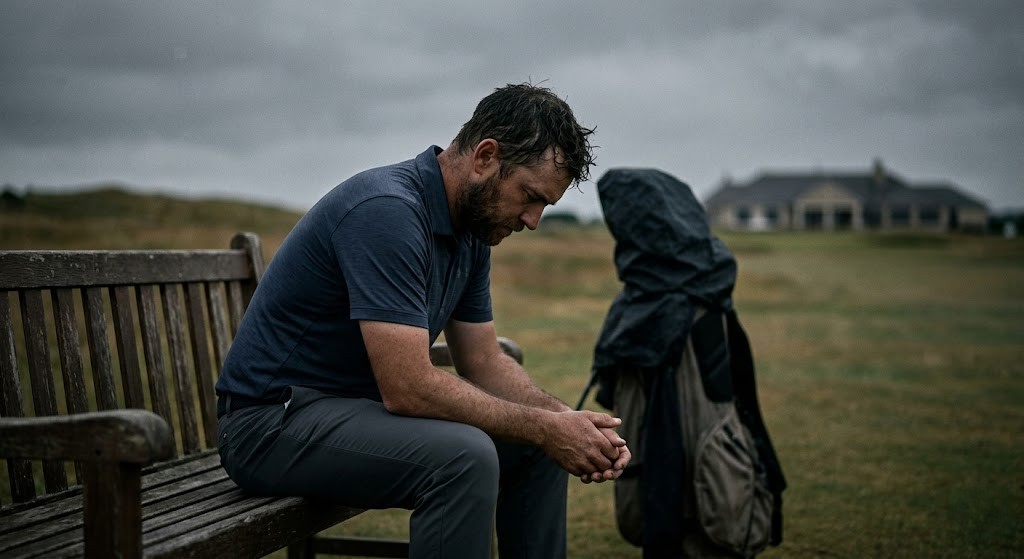
Mental Performance in Golf: The Game Beneath the Game
It often starts quietly.
Not with a dramatic swing fault. Not with a complete collapse. But with a moment where the round begins to mean something.
A short putt to stay inside the cut line. A tee shot with out-of-bounds tight on the right. A par five where birdie suddenly feels necessary. A closing stretch where every decision seems to carry more weight than it did an hour earlier.
The golfer knows the shot. They have practised it hundreds of times. Technically, nothing has changed. But the body feels different. The mind gets louder. The target seems smaller. The consequences feel closer.
This is the reality of mental performance in golf: the swing may be the same, but the competitive environment changes how a player thinks, feels, decides, and commits.
Golf has a unique way of exposing not only the state of a player’s swing, but the state of their attention, emotional control, decision-making, and self-belief. Unlike many sports, golf leaves the player alone for long stretches of time. There are no teammates to absorb momentum swings, no substitutions, and very few places to hide when things begin to unravel.
Across a four- or five-hour round, a golfer has to execute highly technical skills while managing frustration, uncertainty, expectation, nerves, hope, and disappointment. They must make clear decisions while carrying the emotional residue of previous shots. They must stay committed to the present while the mind wants to revisit the last mistake or jump ahead to what the score might mean. A missed short putt can change the emotional tone of a round. A poor decision from trouble can turn one mistake into three. A single swing under pressure can suddenly feel like a judgement on form, talent, or future potential.
Competitive golf does not only reveal the quality of a player’s swing. It reveals the quality of their attention, emotional control, decision-making, and resilience under consequence.
At higher levels of the game, the technical differences between players can be small. Most serious golfers can hit excellent shots. Many can produce strong scores in practice. The separating factor is often not whether a player has ability, but whether they can access that ability when the environment becomes uncomfortable.
That is why competitive golf is not just a technical test. It is a psychological arena.
why mental game clichés fail under pressure
Much of the mainstream conversation around the “mental game” still reduces performance psychology to motivation and positivity. Golfers are often told to “stay positive,” “believe in yourself,” “trust the process,” or “just commit.”
There is nothing wrong with those phrases in principle. The problem is that they rarely survive contact with real pressure.
When a player is standing over a must-make putt, fighting tournament nerves, protecting a score, or trying to recover from a double-bogey, forced positivity can feel hollow. It can even make things worse. The golfer knows they do not feel calm. They know confidence is not easily summoned on command. They know the situation matters.
So now they have two problems: the pressure itself, and the belief that they should not be feeling it.
The goal is not to eliminate nerves. The goal is to build the skill to perform clearly while nerves are present.
This is one of the most misunderstood areas of mental performance in golf. The goal is not to eliminate nerves, silence emotion, or manufacture constant confidence. The best performers are not those who feel nothing. They are those who can continue to think clearly, choose wisely, and commit fully while feeling something.
Pressure is not a sign that the mind is weak. It is information. It tells the golfer that the situation matters. The task is to build the skill to respond well when that information arrives.
what mental performance in golf really means
Modern performance psychology moves beyond generic mindset advice. It is not about creating a perfect internal state before every shot. It is about helping golfers build the psychological skills and habits that allow them to compete effectively in imperfect conditions.
In practice, this means learning how to regulate emotional reactivity after a mistake, rather than allowing one bad hole to dictate the next three. It means recognising when the mind has shifted into threat mode and developing ways to return attention to the shot in front of you. It means building routines that are not just mechanical habits, but attentional anchors under pressure.
Mental performance includes:
Emotional regulation after mistakes
Attention control under pressure
Routines that anchor focus
Confidence built on preparation
Review habits that create learning
It also means developing a more stable form of confidence.
Many golfers think confidence is something they either have or lose. In reality, confidence often becomes fragile when it is built only on recent results, ball-striking, or leaderboard position. One poor warm-up, one bad start, or one uncomfortable tee shot can make the player feel as though their confidence has disappeared.
More robust confidence is built differently. It is rooted in preparation, self-awareness, honest review, and evidence of having handled difficult moments before. It does not require the golfer to feel certain. It gives them a way to act with commitment even when certainty is unavailable.
Robust confidence is not the absence of doubt. It is the ability to stay committed when certainty is unavailable.
This is where mental performance becomes trainable. A golfer can learn to notice unhelpful internal dialogue. They can practice resetting after errors. They can rehearse pressure scenarios. They can develop post-shot responses that prevent emotional leakage. They can build pre-shot routines that protect attention when the mind wants to wander into consequence.
Just as swing changes require repetition, feedback, and patience, psychological skills require conditioning. They cannot be reduced to a quote on a scorecard holder. They have to be trained inside the realities of competitive golf.
the cost of neglecting the mental game in golf
When these skills are underdeveloped, the impact is rarely limited to the scorecard.
Golfers may begin to dread competition despite loving the game. They may practice harder but compete tighter. They may become overly dependent on technical fixes because every poor round feels like proof that something is broken. They may chase confidence through outcomes, comparing themselves constantly with peers, rankings, selections, or social media snapshots of other players’ progress.
For talented juniors, this can create pressure long before they have developed the emotional tools to handle it. For elite amateurs, it can turn qualification, selection, and ranking points into a constant psychological burden. For professionals, it can make each tournament feel like a referendum on identity, career security, and belonging.
The danger is not simply that performance suffers. The danger is that the player begins to experience golf as a threat to who they are. That is why sustainable high performance cannot be separated from wellbeing. Golfers do not perform in isolation from the rest of their lives. Their motivation, confidence, relationships, recovery, and sense of self all shape how they train and compete.
Strong performers are built on the foundation of strong people.
the headsets philosophy: winning well
At Headsets Golf Lab, we believe performance is about more than chasing lower scores. The aim is not to make golfers colder, tougher, or more robotic. The aim is to help them become more intelligent competitors.
That means understanding the person, the athlete, and the performer.
The person brings values, identity, emotion, relationships, and life context. The athlete brings training habits, physical demands, recovery needs, and developmental history. The performer brings routines, attention, decision-making, resilience, and the ability to execute when the moment carries consequence. When these parts are disconnected, performance becomes unstable. A golfer may look composed externally while internally becoming increasingly fragile. They may perform well for a period, but struggle to sustain it. They may win, but not win well.
Winning well means pursuing excellence without losing the person inside the performer. It means developing psychological skills that support both performance and longevity. It means preparing for pressure rather than hoping it does not arrive. Because in competitive golf, pressure will arrive. The question is not whether a player can avoid it. The question is whether they have trained well enough to meet it.
where serious golfers should start
Technical coaching remains essential. Physical preparation matters. Equipment matters. Practice design matters. But for golfers who want to compete consistently, there also needs to be a clear understanding of how the mind behaves under pressure.
How do you respond emotionally after mistakes?
Where does your confidence actually come from?
Do your routines hold up in competition, or only in practice?
Are you building a game that can survive frustration, uncertainty, and consequence?
These are not soft questions. They are performance questions.
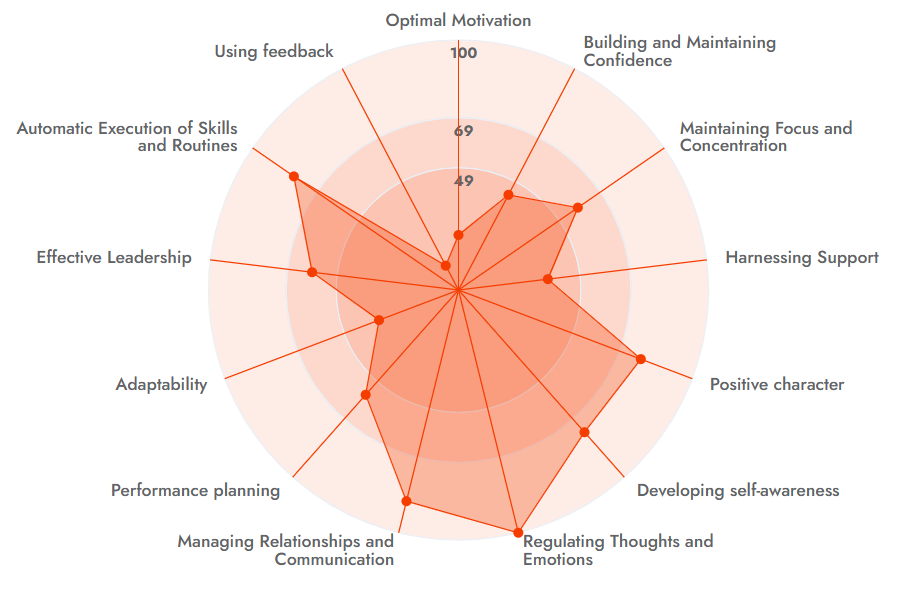
The Headsets Scan is designed to help serious golfers begin answering them. It provides a personalised snapshot of the psychological qualities shaping how you prepare, compete, respond, and recover.
For elite amateurs, aspiring professionals, talented juniors, and competitive golfers who want to understand the game beneath the game, clarity is the starting point.
Because the goal is not simply to play better when everything feels easy.
The goal is to build the kind of performer who can stay clear, committed, and resilient when the round begins to matter.
discover what pressure reveals in your game
Take the Headsets Scan and receive a personalised snapshot of the psychological qualities shaping how you prepare, compete, recover, and perform when it matters most.
Sam is a Chartered Psychologist (British Psychological Society) with over a decade of experience working in high performance sport with athletes and sport organizations. He founded Headsets to help people win well, combining cutting-edge science with a genuine passion for supporting the person behind the performer.