Mental Health in Golf: Why the Person Behind the Player Matters
when the scorecard does not tell the whole story
It is late on Friday afternoon, and the cut line has moved again.
The golfer knows what it means before anyone says it. One loose tee shot, one impatient decision, one missed five-footer, and the weekend disappears. From the outside, it may look like a technical problem. A face angle issue. A poor club choice. A stroke lost on the greens.
From the inside, it often feels heavier than that.
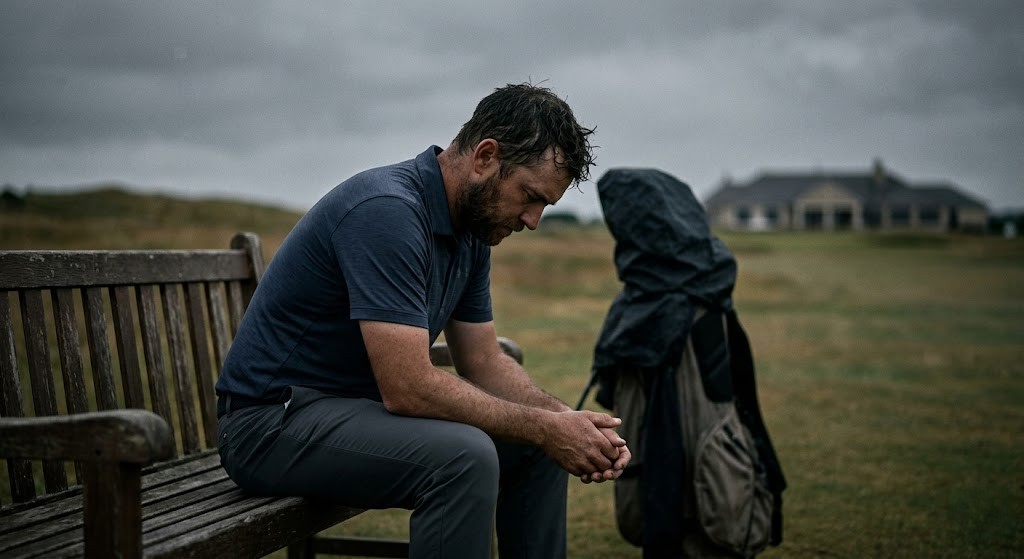
Competitive golf has a way of revealing the person behind the player. A golfer can look calm on the outside while carrying pressure that no one sees: the weight of expectations, the financial strain of missed cuts, the loneliness of travel, and the quiet fear that a poor run of form might change how others see them, or how they see themselves.
This is one of the hidden truths of the game. Golf does not simply ask, “Can you hit the shot?” It asks whether you can still think clearly after disappointment. Whether you can stay patient when your swing feels unfamiliar. Whether you can recover when the result matters and the margins are thin.
For too long, mental health has been treated as something separate from performance. But in serious golf, the separation does not hold. The way a golfer thinks, recovers, manages pressure, maintains relationships, and makes sense of setbacks directly shapes how they compete.
The scorecard records what happened. It rarely explains what it cost
The World Health Organization defines mental health as a state of wellbeing in which a person can realise their abilities, cope with normal life stresses, work productively, and contribute to their community [1]. For golfers, that definition matters because performance is not built on technique alone. It is built on the wider system that allows the player to function, adapt, connect, and keep going.
At Headsets Golf Lab, our philosophy is simple: a strong performer stands on the foundation of a strong person. We help athletes not just win, but win well.
why mental health in golf is a performance resource
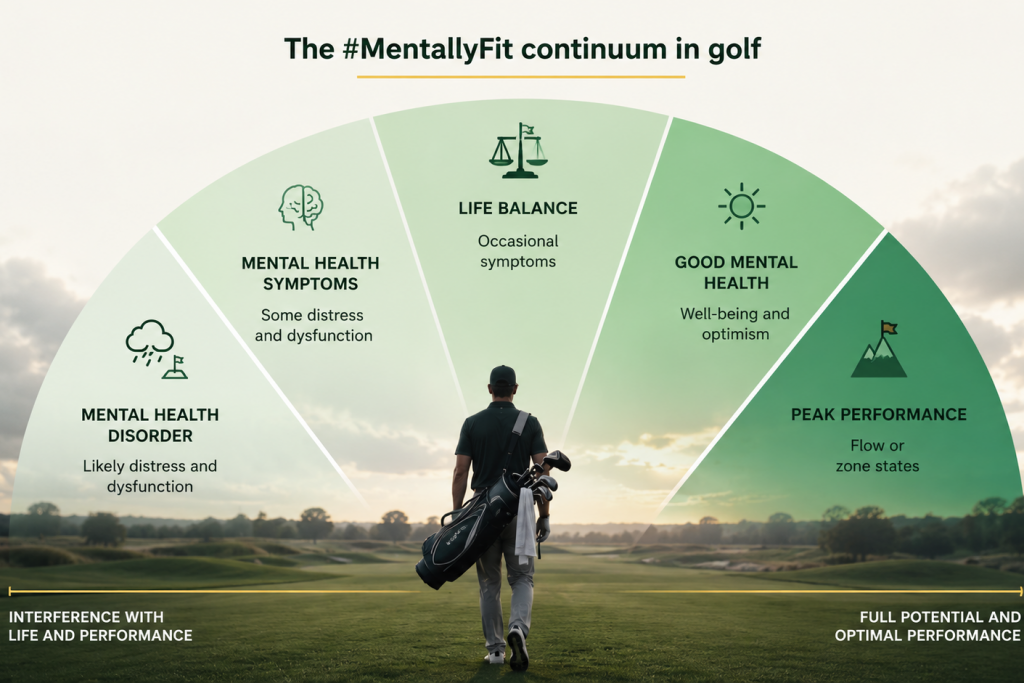
Mental health is not only relevant when something has gone wrong. It is one of the resources that helps a golfer pursue goals, manage challenge, recover from difficulty, and stay connected to the people and environments around them.
That distinction matters.
A golfer does not need to be in crisis for mental health to shape performance. It is there in the quiet reset after a double bogey. It is there in the decision to commit to a shot when confidence is low. It is there in the patience to stay with a process when competition, family expectations, coach relationships, financial concerns, social comparison, or recent performances are pulling attention elsewhere.
When mental health is well supported, the golfer is more likely to adapt, recover, and compete with clarity. When it is under strain, too much energy can be spent managing threat rather than responding freely to the demands of the game.
That does not mean every poor round is a mental health issue. Golf is technically difficult, tactically complex, and sometimes brutally unfair. But it does mean mental load matters.
If a player is exhausted, isolated, under-supported, or interpreting every failure as a verdict on their worth, performance and wellbeing become harder to sustain. The mind does not sit outside the game. It travels with the player to the first tee, the practice ground, the hotel room, the car journey home, and the next tournament.
wellbeing: managing the demands of the game
Wellbeing is often misunderstood as simply feeling good. In performance environments, it is better understood as a balance between the demands a person faces and the physical, mental, and social resources they have available to meet those demands [2].
For competitive golfers, those demands can be distinctive. Research in elite sport shows that athletes can experience psychological distress, anxiety, depression, alcohol misuse, and sleep disturbance, although the evidence specific to elite golfers remains less developed than in some other sports [3]. That caution is important. The science does not yet allow sweeping claims about all golfers. But the available evidence gives us enough to take the issue seriously.
Studies with professional golfers have highlighted several pressures that will feel familiar to many players: competition with other players, financial concerns, family difficulties, coach relationships, and performance-related stress [4]. Qualitative work has also described the realities of professional golf as a travelling life marked by long schedules, time away from home, isolation, superficial relationships, limited support, financial pressure, and an imbalance between effort and reward [5].
For many golfers, pressure is not dramatic from the outside. It is cumulative. Another early start. Another practice round. Another missed cut. Another conversation about what needs fixing. Another week where the player is expected to be disciplined, composed, grateful, and ambitious, even when they feel flat.
When demands stay high and resources such as recovery, perspective, social support, and active coping are ignored, the game starts to feel heavier than it needs to. Some performance difficulties may be intensified by overload.
Sometimes the answer is not another swing thought. It is a better performance system
A better system does not remove pressure. Serious golf will always involve consequence. But it helps the player meet pressure with more stability. It creates space for recovery. It protects perspective. It makes support normal rather than exceptional.
That is the difference between surviving tournament golf and being prepared for it.
why identity matters
One important psychological risk in competitive golf is allowing performance outcomes to become too closely tied to self-worth and identity.
Golf gives constant feedback. Every hole has a number. Every round becomes a comparison. Scores, rankings, cuts, selections, scholarships, contracts, and social media results can make performance feel public and personal.
Research with golfers suggests that the way players interpret failure can have serious consequences. Destructive interpretations of choking or poor performance have been associated with loss of confidence, reduced self-worth, thoughts of leaving the sport, and, in some cases, self-destructive responses [6]. Other work with developmental tour golfers has shown how uncertainty around career prospects can affect self-esteem and athletic identity [7].
This does not mean every disappointment is damaging. Disappointment is part of competitive golf. The issue is what the disappointment starts to mean.
The best performers care deeply about their results, but they do not let those results define their worth. They learn to separate the score from the self. That does not mean they care less. It means they recover better.
Winning well is not about caring less. It is about caring deeply without losing yourself in the result
This is not soft thinking. It is high-performance thinking.
A golfer who believes every poor round proves something about their value is likely to compete from threat. Their attention narrows. Their body tightens. Their decisions become more protective. They may chase fixes, avoid risk, over-practice, withdraw from others, or become trapped in constant self-evaluation.
By contrast, a golfer who can hold disappointment without becoming defined by it has more room to respond. They can review honestly, adjust intelligently, and return to work without carrying unnecessary emotional weight.
mental health literacy is part of preparation
Competitive golfers do not need vague encouragement to “stay positive.” They need better literacy. Mental health literacy means understanding mental health, recognising symptoms, using self-management strategies, challenging stigma, knowing how to access support, and being able to advocate for yourself and others when needed [8].
In golf, this matters because pressure can easily be misread. Fatigue may be treated as weakness. Anxiety may be hidden to protect image. Isolation may be normalised as part of the journey. A young golfer may feel they have to keep everything together because parents, coaches, sponsors, or selection staff are watching.
Mental health literacy does not turn players into clinicians. It helps them become more aware, more honest, and more prepared. It helps them notice when normal competitive stress is becoming persistent strain. It helps them know when to reflect, when to rest, when to speak, and when to seek professional support.
The best support is also context-specific. Golf has its own culture, pathways, pressures, status markers, family dynamics, and performance demands. A serious mental performance system has to understand that world. It has to support the whole golfer, not just the tournament score [9].
the performance check-in: a quick audit
If you review your swing data, you should review your performance system too. After your next round or training block, use these three questions to audit your state of play.
1. assess demands
What was the greatest demand on my focus today? Was it expectation, technical noise, comparison, fatigue, pressure from others, or fear of what the score might mean?
2. identify support
Did I invest in the resources I needed to perform again? This might include sleep, nutrition, time away from golf, honest reflection, social support, or a conversation with someone who helps me keep perspective.
3. review
Was this round information I can learn from, or did I treat it as a verdict on my capability or worth?
These questions are not designed to excuse poor performance. They are designed to make performance more understandable. Serious golfers need honest feedback, but they also need the emotional intelligence to interpret that feedback accurately.
A bad round may tell you something about preparation, decision-making, recovery, confidence, technical execution, or attention. It should not automatically become a story about who you are.
winning well: the headsets view
At Headsets Golf Lab, we believe in winning well. This means developing the mental skills to perform under pressure while protecting the person who makes that performance possible.
This is why mental performance work should not only begin when something has gone wrong. It should be part of how competitive golfers prepare, reflect, recover, and develop. The strongest performers are not built through slogans. They are built through systems: clear routines, honest reflection, emotional regulation, intelligent recovery, strong support, and a sense of identity that can survive the natural volatility of the game.
Golf will always test the player. The goal is to build a person who can meet that test with clarity, resilience, and perspective.
When the person is supported well, the player is better prepared to perform
understand what is driving your tournament performance
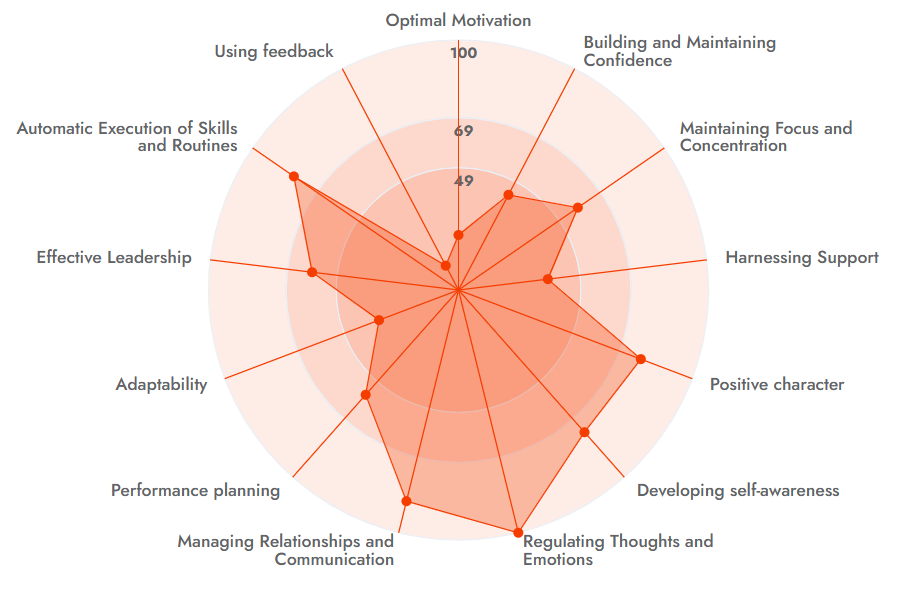
The Headsets Scan helps competitive golfers understand the person, athlete, and performer behind the scorecard. We identify the psychological patterns, pressure responses, confidence blocks, and support needs that may be shaping your golf. From there, we build a practical Mental Roadmap designed to help you perform with greater clarity, resilience, and control when it matters most.
[1] World Health Organization (2001) Strengthening Mental Health Promotion. Fact Sheet No. 220. Geneva: World Health Organization.
[2] Dodge, R., Daly, A., Huyton, J. and Sanders, L. (2012) ‘The challenge of defining wellbeing’, International Journal of Wellbeing, 2(3), pp. 222–235. https://doi.org/10.5502/ijw.v2i3.4
[3] Reardon, C.L., Hainline, B., Aron, C.M., Baron, D., Baum, A.L., Bindra, A. et al. (2019) ‘Mental health in elite athletes: International Olympic Committee consensus statement’, British Journal of Sports Medicine, 53(11), pp. 667–699. https://doi.org/10.1136/bjsports-2019-100715
[4] Kim, S-Y. and Choi, C. (2022) ‘Differences in stress, stress-coping behavior, and quality of life based on the performance of Korean Ladies Professional Golf Association Tour players’, International Journal of Environmental Research and Public Health, 19(11), 6623. https://doi.org/10.3390/ijerph19116623
[5] Fry, J. and Bloyce, D. (2017) ‘Life in the travelling circus: A study of loneliness, work stress, and money issues in touring professional golf’, Sociology of Sport Journal, 34(2), pp. 148–159. https://doi.org/10.1123/ssj.2017-0002
[6] Hill, D.M., Cheesbrough, M., Gorczynski, P. and Matthew, N. (2019) ‘The consequences of choking in sport: A constructive or destructive experience?’, The Sport Psychologist, 33(1), pp. 12–22. https://doi.org/10.1123/tsp.2018-0070
[7] Matz, R., Smith, A. and Choi, J. (2022) ‘COVID-19 disruptions: Impact on athletic identity, career transitions, and life of a developmental tour golfer’, Managing Sport and Leisure. https://doi.org/10.1080/23750472.2022.2046488
[8] Jorm, A.F., Korten, A.E., Jacomb, P.A., Christensen, H., Rodgers, B. and Pollitt, P. (1997) ‘Mental health literacy: A survey of the public’s ability to recognise mental disorders and their beliefs about the effectiveness of treatment’, Medical Journal of Australia, 166(4), pp. 182–186.
[9] Gorczynski, P., Currie, A., Gibson, K., Gouttebarge, V., Hainline, B., Castaldelli-Maia, J.M., Mountjoy, M., Purcell, R., Reardon, C.L., Rice, S. and Swartz, L. (2021) ‘Developing mental health literacy and cultural competence in elite sport’, Journal of Applied Sport Psychology, 33(4), pp. 387–401. https://doi.org/10.1080/10413200.2020.1720045
Dr Sam Giles
BPS Chartered Psychologist
Sam is a Chartered Psychologist (British Psychological Society) with over a decade of experience working in high performance sport with athletes and sport organizations. He founded Headsets to help people win well, combining cutting-edge science with a genuine passion for supporting the person behind the performer.